
Double Declining Balance Depreciation Calculator

Increase your desired income on your desired schedule by using Taxfyle’s platform to pick up tax filing, consultation, and bookkeeping jobs. Get started with Taxfyle today, and see how filing taxes can be simplified. Setting up a foreign-owned business in the https://putnampals.com/?p=51388 U.S. requires lots of tax planning. Here are some of the forms that most foreign-owned U.S. businesses will need.
Learn & Transform

By automating calculations, ensuring compliance, and integrating with existing systems, Wafeq empowers finance teams to focus more on analysis and less on manual tracking. The Double Declining Balance (DDB) method is not a one-size-fits-all solution. Knowing when it fits best can maximize financial accuracy and strategic benefits while avoiding potential Foreign Currency Translation drawbacks. In this article, we’ll explore how the DDB method works, when to use it, how to calculate it step-by-step, and how tools like Wafeq can help automate the entire process. They have estimated the machine’s useful life to be eight years, with a salvage value of $ 11,000.
- In the sum-of-the-years digits depreciation method, the remaining life of an asset is divided by the sum of the years and then multiplied by the depreciating base to determine the depreciation expense.
- These tools can automatically compute depreciation expenses, adjust rates, and maintain depreciation schedules, making them invaluable for businesses managing multiple depreciating assets.
- This results in depreciation being the highest in the first year of ownership and declining over time.
- From double-declining to month-end reporting, see how AI makes accounting smarter.
An Overview of Tax Implications for Foreign-Owned Businesses in the U.S.
On January 1, Speedy Delivery Company purchased a delivery van for $90,000. Speedy estimates that at the end of its six-year service life, the van will be worth $30,000. During the six-year period, the company expects to drive the van 200,000 miles. Note how the book value of the machine at the end of year 5 is the same as the salvage value. Over the useful life of an asset, the value of an asset should depreciate to its salvage value. The equipment was expected to have a useful life of 3 years, or 4,860 operating hours, and a residual value of $1,080.
- Note how the book value of the machine at the end of year 5 is the same as the salvage value.
- It means that the asset will be depreciated faster than with the straight line method.
- You get more money back in tax write-offs early on, which can help offset the cost of buying an asset.
- In year three, the amount that would be generated by Straight-Line at that point in time would be the depreciable cost, which is now $3,600 divided by three as we only have three years left in the assets life.
Accumulated Depreciation Over the Asset’s Lifespan
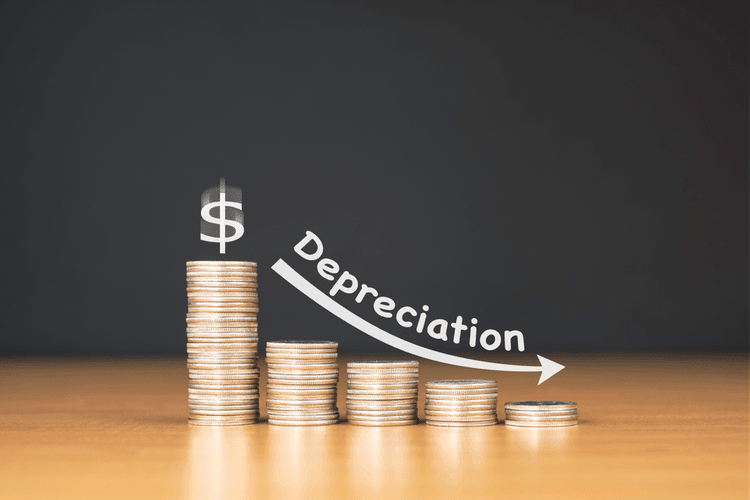
Depreciation expense is used in accounting to allocate the cost of a tangible asset over its useful life. In other words, it is the reduction in the value of an asset that occurs over time due to usage, wear and tear, or obsolescence. The four main depreciation methods mentioned above are explained in detail below. First-year depreciation expense is calculated by multiplying the asset’s full cost by the annual rate of depreciation and time factor. On the other hand, with the double declining balance depreciation method, you write off a large depreciation expense in the early years, right after you’ve purchased an asset, and less each year after that.
- That is less than the $5,000 salvage value determined at the beginning of the asset’s useful life.
- At the end of an asset’s useful life, the total accumulated depreciation adds up to the same amount under all depreciation methods.
- As you can see, the depreciation rate is multiplied by the asset book value every year to compute the deprecation expense.
- Cheetah Copy also estimates it will use the machine for four years or about 8,000 total hours.
- Next year when you do your calculations, the book value of the ice cream truck will be $18,000.
It is a bit more complex than the straight-line method of depreciation but is useful for deferring tax payments and maintaining low profitability in the early years. Double declining balance depreciation is an accelerated depreciation method that charges twice the rate of straight-line deprecation on the asset’s carrying value at the start of each accounting period. The Double Declining Balance Method (DDB) is a form of accelerated depreciation in which the annual depreciation expense is greater during the earlier stages of the fixed asset’s useful life. While straight-line depreciation rates offer more stable expense reporting, the double-declining balance method takes a more detailed—and often realistic—view. It accommodates fixed assets like machinery, vehicles, or technology that depreciate rapidly at first, before slowing as time goes on. Whether you’re a seasoned finance professional or new to accounting, this blog will provide you with a clear, easy-to-understand guide on how to implement this powerful depreciation method.
Steps:
After the first year, we apply the depreciation rate to the carrying value (cost minus accumulated depreciation) of the asset at the start of the period. If, for example, an asset is purchased on 1 December and the financial statements are prepared on 31 December, the depreciation expense should only be charged for one month. In the accounting period in which an asset is acquired, the depreciation expense calculation needs to account for the fact that the asset has been available only for a part of the period (partial year). The following section explains the step-by-step process for calculating the depreciation expense in the first year, mid-years, and the asset’s final year.
- At the end of the second year, we subtract the first year’s depreciation from the asset’s cost, and then apply 40% to that number.
- Your accounting strategy needs to reflect this depreciation so you can align expenses with revenue and pay the right taxes to stay in line with financial reporting standards.
- Since the double declining balance method has you writing off a different amount each year, you may find yourself crunching more numbers to get the right amount.
- Depreciation is a crucial concept in business accounting, representing the gradual loss of value in an asset over time.
- For instance, in the fourth year of our example, you’d depreciate $2,592 using the double declining method, or $3,240 using straight line.
- But I do recommend working with your CPA or financial advisor to set-up depreciation schedules for any new assets your business may acquire.
Accounts Receivable Software
The total expense over the life of the asset will be the same under both approaches. Continuing with the same numbers as the example above, in year 1 the company would have depreciation of $480,000 under the accelerated approach, but only $240,000 under the normal declining balance approach. By accelerating the depreciation and incurring a larger expense in earlier years and a smaller expense in later years, net income is deferred to later years, and taxes are pushed out.
The drawbacks of double declining depreciation
Because depreciation, ultimately, reduces taxable income, we want to depreciate each asset down to zero or expense money is left on the table. Unlike straight-line depreciation, we don’t double declining balance method apply the percentage (40% in our example) to the total purchase price of the asset every year—just the first year. If an asset’s book value falls below its salvage value during the depreciation process, adjust the depreciation expense in that year to ensure it doesn’t go below the salvage value. This adjustment ensures that the asset’s book value never falls below its expected salvage value. Choosing between the two depends on the nature of the asset and the business’s financial strategy.

Leave a Reply
Want to join the discussion?Feel free to contribute!